
Posts Tagged ‘government contracts’
Government Contractor Profit Margins: The Hidden Costs Eating Into Your Profits

Government contractor profit margins are under increasing pressure. Between rising labor costs, growing compliance requirements, competitive contract pricing, and delayed payments, government contractors are being asked to do more with less. While winning additional contracts can increase revenue, it doesn’t necessarily translate into higher profits. With margins shrinking, it’s more important than ever for government…
Read MoreSEWP Contract Holders — Are You Accepting Government Purchase Cards Correctly?

For businesses that have recently been awarded a SEWP contract — NASA’s Solutions for Enterprise-Wide Procurement vehicle — the next step is getting set up to accept payment from federal purchasing agents. Most of those payments come by government purchase card. And while accepting a government purchase card looks straightforward on the surface, how that transaction…
Read MoreSurcharging Government Purchase Cards — What Government Contractors Need to Know
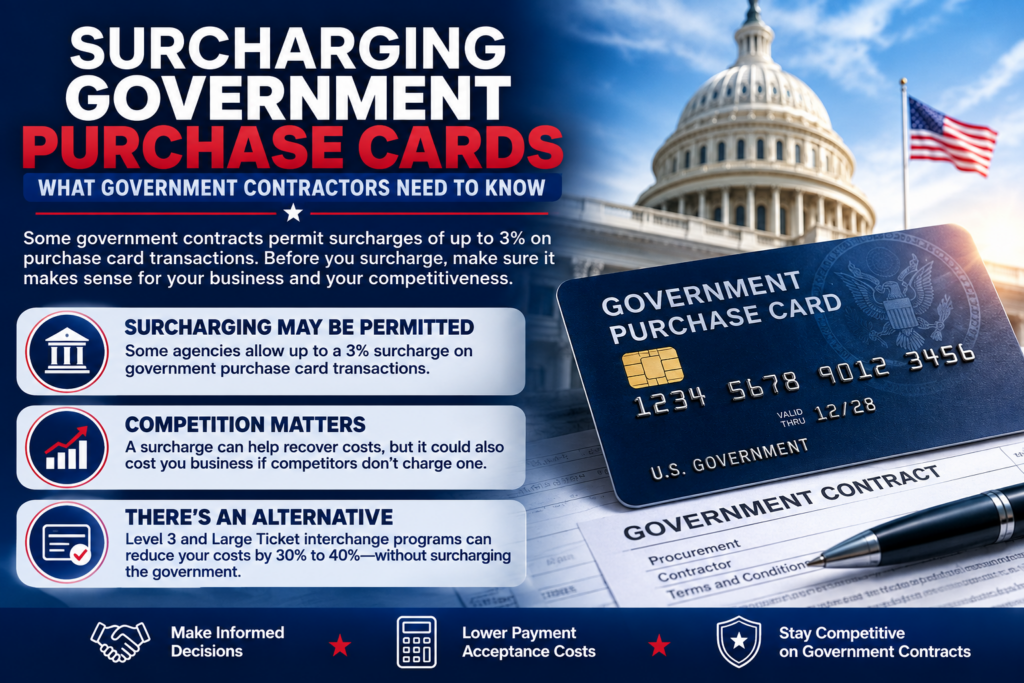
Some government contractors are permitted to do surcharging on government purchase card transactions. Whether doing so makes sense is a different question — and for contractors who choose not to surcharge, there is a path to significantly lower interchange costs that most processors never mention. The question of whether government contractors can surcharge government purchase cards is…
Read MoreWon a Government Contract — Now What About Getting Paid Correctly?
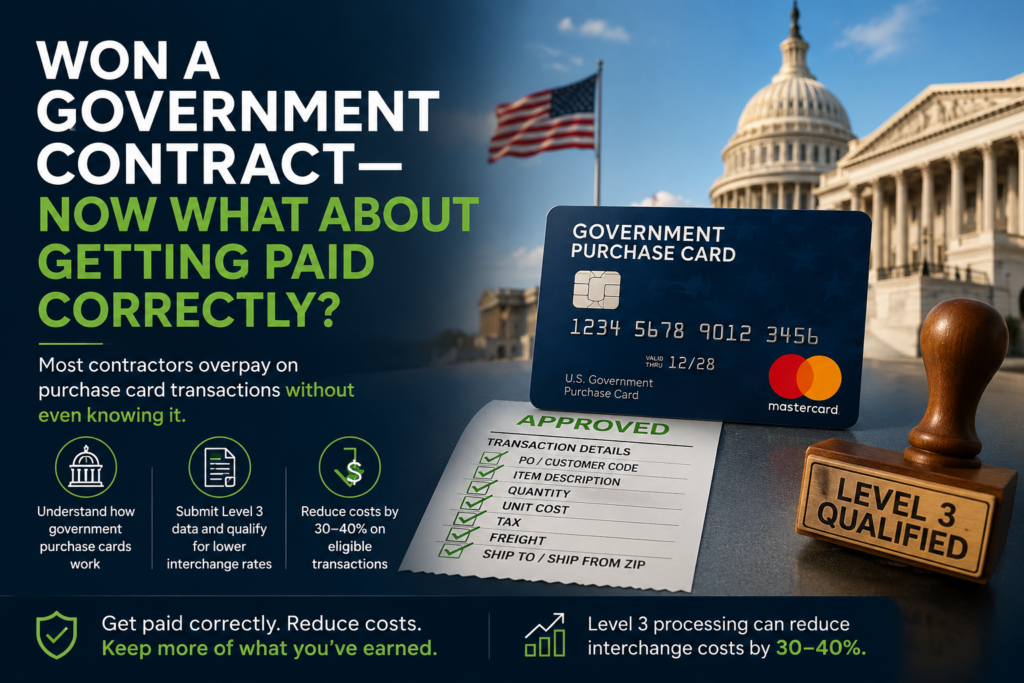
For any contractor asking won a government contract now what — the answer almost never includes what to do about accepting payments correctly. Winning a government contract is a significant achievement — and the government contracting industry has built an entire ecosystem around helping businesses get there. SAM.gov registration services, proposal writers, CAGE number consultants, bid…
Read MoreHow Government Contractors Can Reduce Credit Card Processing Fees

Even after the contract is awarded, many government contractors unknowingly overpay on credit card processing — not because of high processor rates, but because of how transactions are configured behind the scenes. If you’re wondering how government contractors can reduce credit card fees, it starts with understanding interchange — the non-negotiable base cost set by…
Read MorePayment Processing Fees for Government Contractors

In today’s competitive government contracting landscape, keeping overhead low is more important than ever. Yet, one hidden expense continues to chip away at margins — payment processing fees for government contractors. Many contractors unknowingly pay far more than necessary, especially on Business-to-Business (B2B) and Business-to-Government (B2G) transactions, simply because their payment systems aren’t configured to…
Read More